Date Added: 31/03/2022
It's Stress Awareness Month this April and we will be sharing some information and tips to help understand this topic that affects us all in some way.
Let's start by figuring out what stress is...
By definition, stress is mental or emotional strain caused by an adverse or demanding situation. Certain circumstances cause us to feel threatened. It could be a job, a relationship, school, or something else. Our body responds by releasing chemicals such as adrenaline and cortisol, telling us to be ready for action!
We are usually able to deal with short-term stress, but when it becomes chronic we start to see symptoms such as headaches, nervousness, irritability, and a feeling of being overwhelmed.
Why is it important to know what stress is? Well, once we know how to spot it, we can start looking for ways to manage it better. Additionally, a build-up of stress can cause fatigue, anxiety, and burnout, which makes it even more important to keep our stress levels in check.
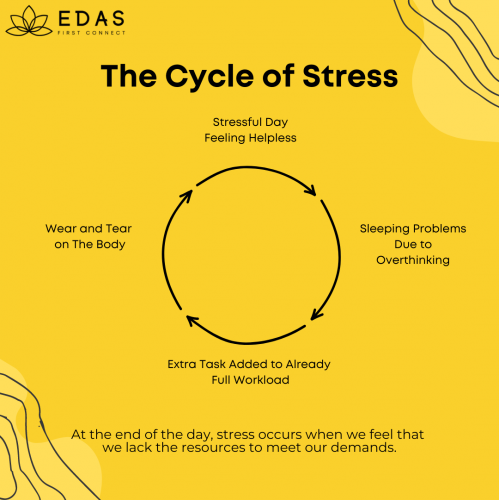
Does this sound familiar? We can get stuck in this cycle quite easily and sometimes feel like it's impossible to get out. It can start to affect us both mentally and physically, which is why learning proper tools to cope is key to breaking the cycle.
This can be done by finding activities that help you release stress, such as journalling (see our recent post), speaking to a counsellor, a healthy lifestyle, and mindful activities.
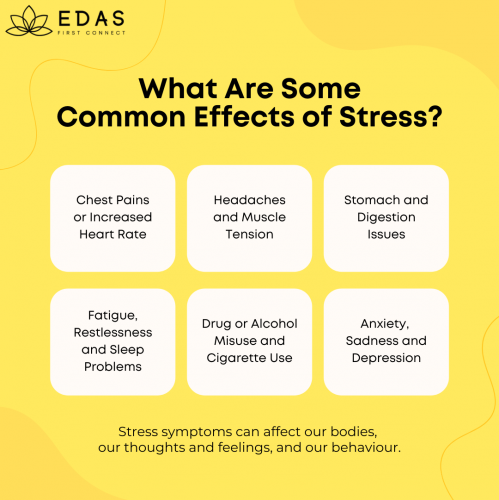
Often the symptoms of stress can be seen in our behaviour and the way we feel physically. Take a moment and ask yourself if you are experiencing any of these issues. If you are, it could be a sign that you are stressed.
- Chest pains and increased heart rate
- Headaches and muscle tension
- Stomach and digestion issues
- Fatigue
- Restlessness and/or sleeping problems
- Drug and/or alcohol misuse
- Cigarette use
- Anxiety
- Sadness or depression
Talking therapy is a great way to learn new coping skills and change behaviours that could be causing you stress. EDAS is on hand, providing affordable online and in-person therapy to help support you. Click here to find out more.
Being able to recognise stress symptoms could help you manage them. Stress that is left unchecked could contribute to health issues, such as high blood pressure, heart disease, obesity, and diabetes.

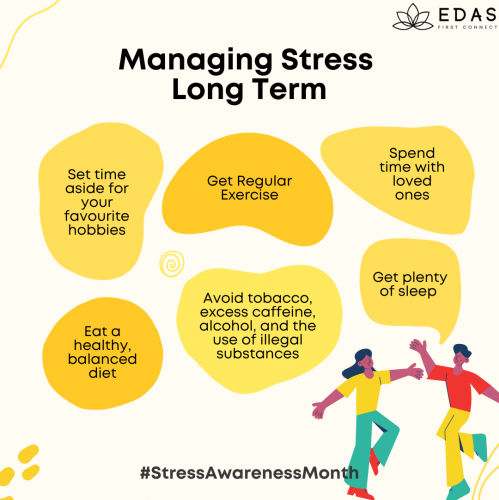
Keep up with tips and advice throughout #StressAwarenessMonth and other campaigns by following us on Facebook and Instagram.
Need to talk? Access affordable face-to-face and online counselling sessions. Click here.


